Privacy Policy
What is the data privacy policy document?
The Privacy Policy and Data Protection document of a website or online store contains the rules relating to the processing (collection, management and retention) of personal data. This document must clearly reflect what user data is being collected, for how long it will be stored and for what purpose the personal data collected in the different parts of the website is stored.
What is considered personal data?
Personal data is any information relating to an identified or identifiable person, also known as 'the data subject'.
Examples of personal data:
- Person's name and surname.
- Address or location.
- Identity document number, passport, etc.
- Income data.
- Cultural profile data.
- Public IP address.
- Data held by hospitals or doctors (which identify a person solely for health purposes).
Personal data cannot be processed about:
- Race or ethnicity.
- Sexual orientation.
- Political opinions.
- Religious or philosophical beliefs.
- Trade union membership.
- Genetic, biometric or health data, except in specific cases.
- Criminal convictions and offences, unless authorized by national or EU law.
Privacy policy for Shopify or WordPress stores.
Likewise, if your website uses WordPress, Shopify, WooCommerce, PrestaShop, etc., the document regulating the privacy policy for personal data is mandatory for all those websites or online stores that collect personal data from their users. Personal data is considered to be any information that refers to an identified or identifiable person (e.g. name, postal address, email address, telephone number).
Example of privacy policy for websites
The main condition it must meet is that we must have a link to our website or privacy policy document and this must be in a place that is properly visible and accessible to the user. In data collection forms, users must be informed at all times about the processing of such data or with a link to the privacy policy where the purposes of such data processing will be reflected.
Who does the GDPR affect? Only Europeans?
The GDPR affects companies that process personal data as part of the activities of one of their branches established in the European Union (EU), regardless of where the data is processed.
My hosting is outside the European Union, is there any problem?
A piece of data that many companies or people with websites or online stores completely overlook is the location of the servers of our hosting provider. When contracting the hosting for our website, we must take into account where the servers are physically located where we are going to host our site.
Can I use templates or copy policies from other websites?
It is a very widespread practice to go to a website in a sector similar to ours, look for their policies and copy them changing the company name. This practice may seem legitimate thinking that in this way our website already has the legal texts and for this reason we already comply with the law, but... Do you know if those texts are up to date with current legislation?
Applicable legislation to the data privacy policy
The privacy policy and personal data protection policy must incorporate the following content:
Privacy policy requirements:
- The identity and contact details of the data controller(s)
- In case a Data Protection Officer (DPO) has been appointed, the contact details
- The categories of personal data that will be processed
- The purposes of processing for which the personal data is intended
- The retention period of personal data on the website
- The recipients of the personal data collected on the website
- The information relating to the rights derived from the processing of personal data
Applicable legislation:
- Regulation (EU) 2016/679 of the European Parliament and of the Council, of 27 April 2016
- Organic Law 3/2018, of 5 December, on Data Protection and Guarantee of Digital Rights
- Royal Decree 1720/2007, of 21 December, approving the implementing regulation of Organic Law 15/1999, of 13 December, on Personal Data Protection
- Law 34/2002, of 11 July, on Information Society Services and Electronic Commerce (LSSI-CE)
Your business runs on memory, WhatsApp and five spreadsheets.
SOM-OS turns it into a system: captures clients, serves them, sells and gets paid — even while you sleep. Touch the demos: they are real.
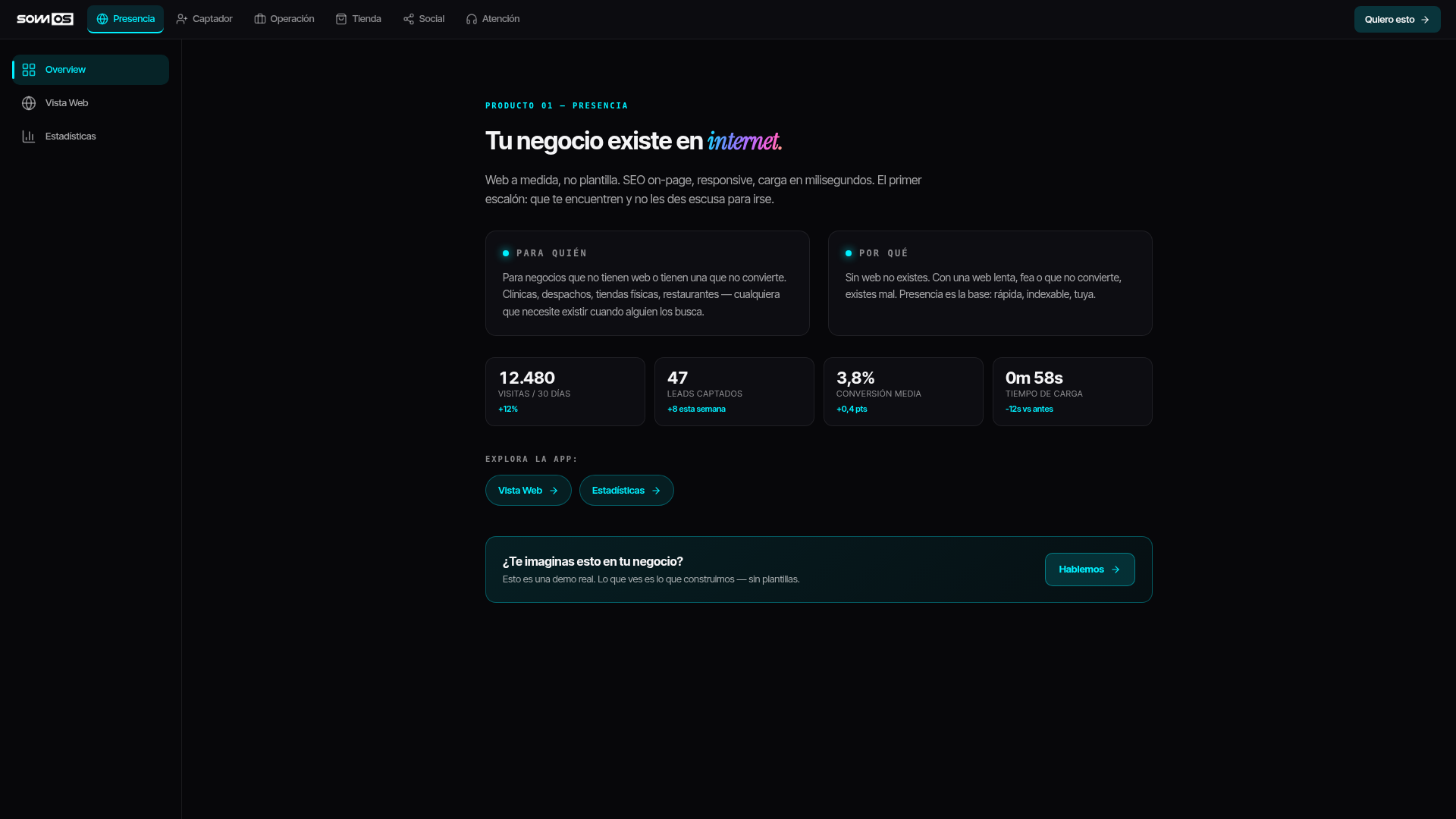
Be found when they look for you
People search Google for you and you don't show up. Or a slow, embarrassing website does.
A website of your own, serious and fast, built to turn visits into customers. The first step to existing on the internet.
- Loads in a second, not ten
- Shows up on Google when they search
- Looks perfect on mobile
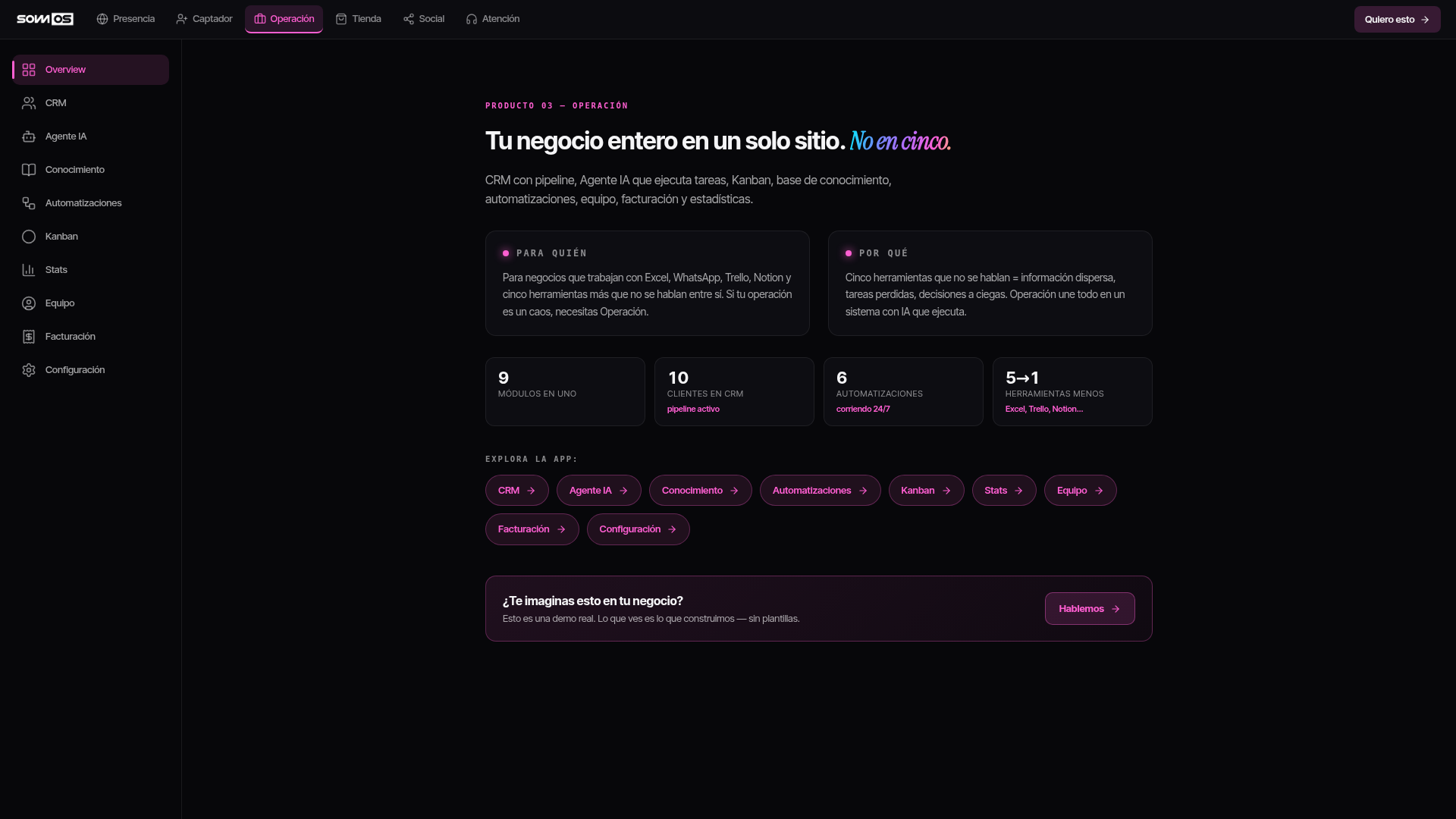
Your whole business in one place
A spreadsheet for clients, another for invoices, WhatsApp for decisions… and none of it talks to each other.
Clients, tasks, invoices and to-dos in the same place — with an assistant that remembers everything for you and tells you what today needs.
- No more “where did I write that down?”
- Repetitive work: the system does it
- Everything important, at a glance
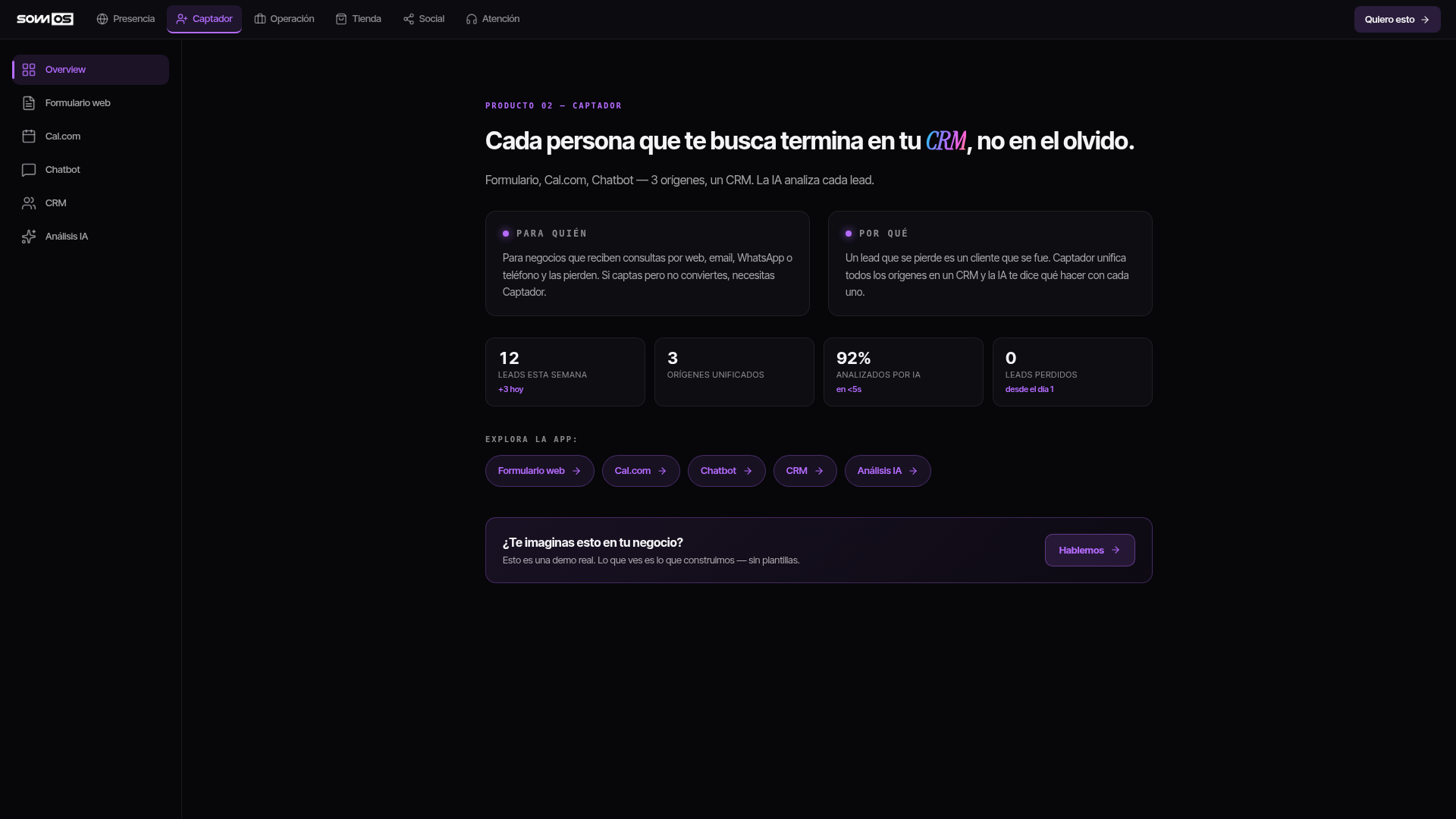
No customer slips away unanswered
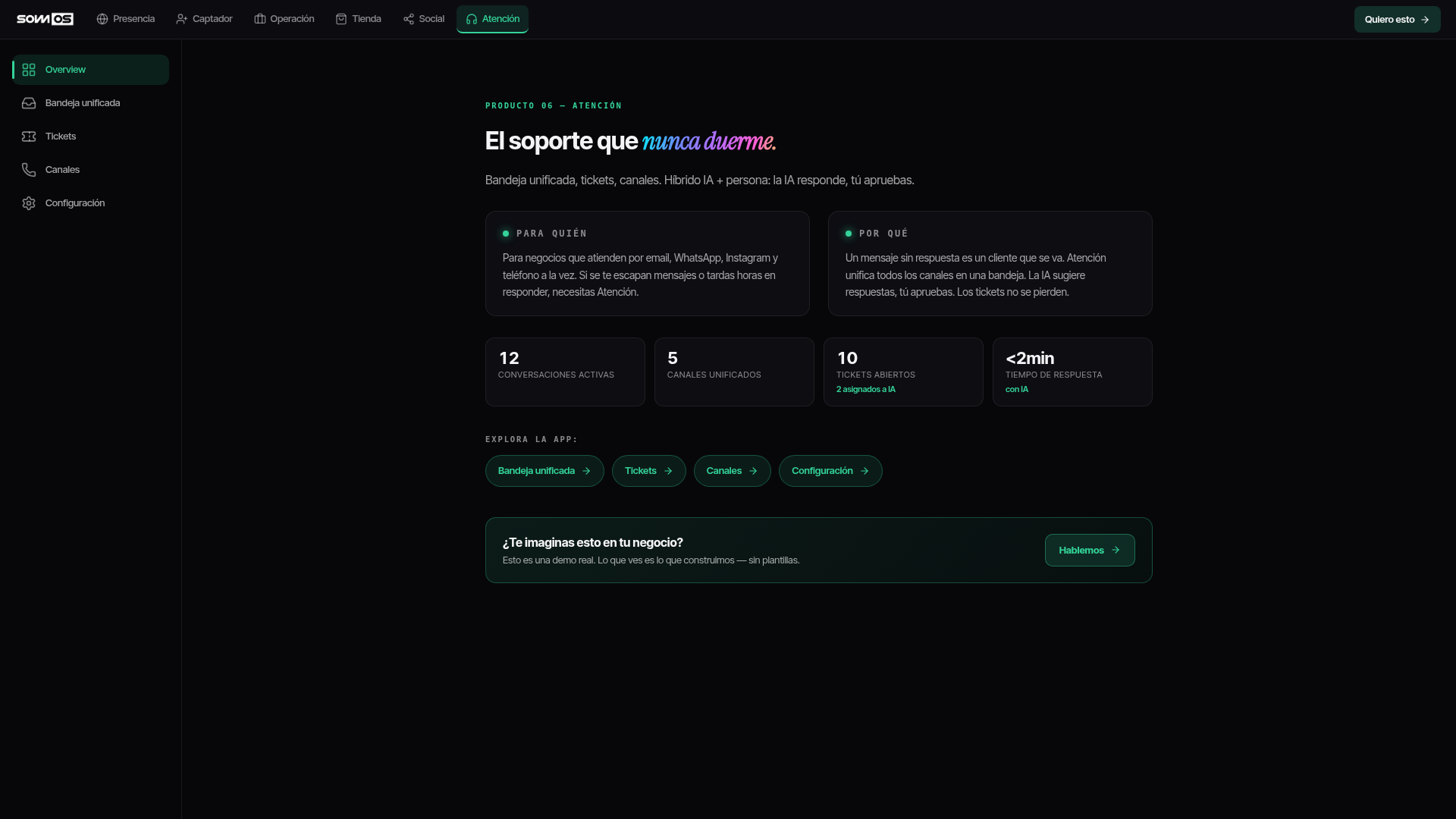
Inquiries by WhatsApp, email and phone… and half of them get lost in the noise.
Everything people send you lands in one place, sorted and prioritized. You know who contacted you, what they want and what to do next.
- Every inquiry in one place
- Tells you which lead is urgent
- Nobody is left without an answer
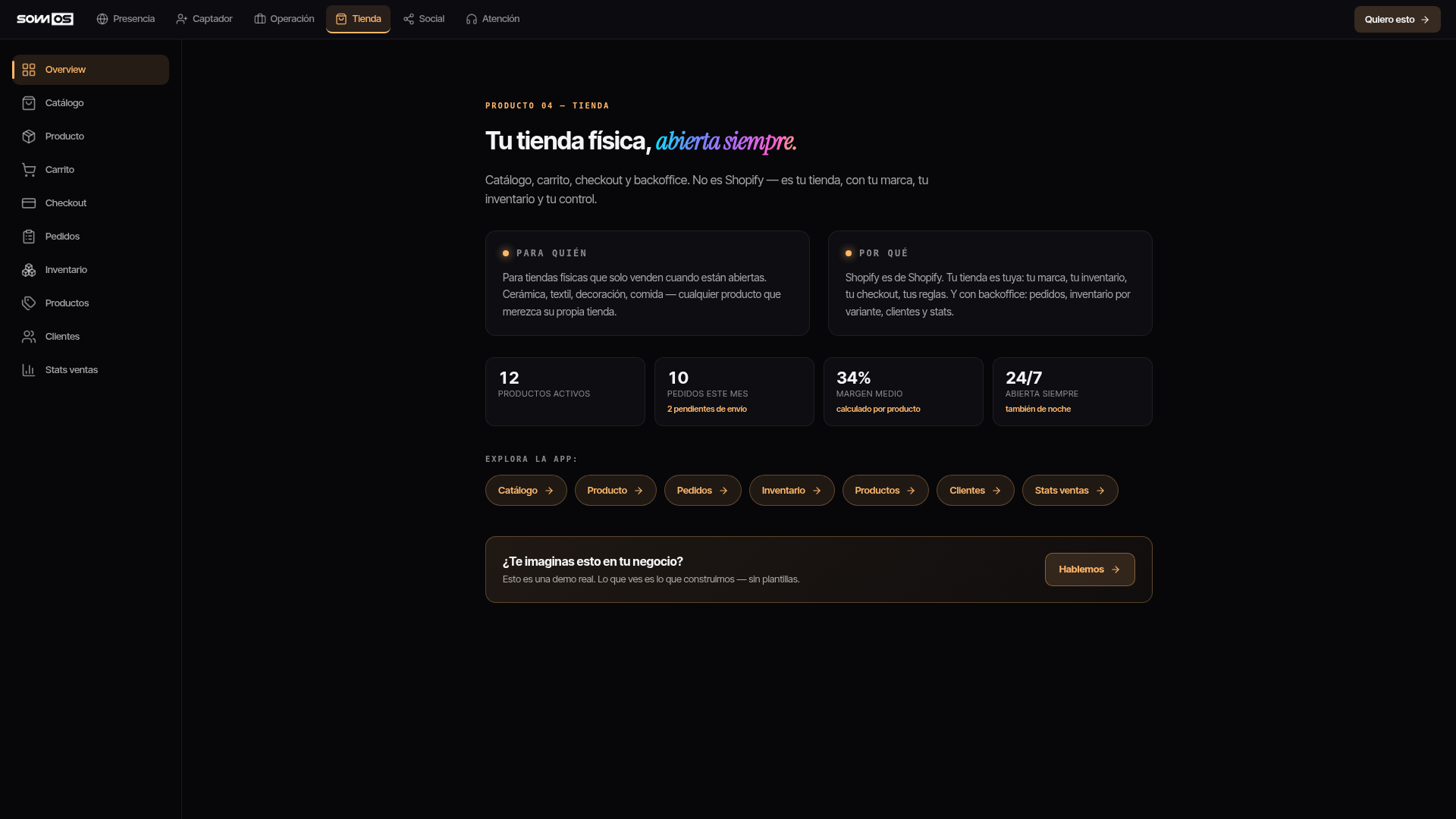
Your store open at night too
You close at six and stop selling until tomorrow. And store platforms eat your margin.
Your catalog, your checkout, your inventory and your orders under your brand. Sell 24/7 with no middleman fees.
- Sell while you sleep
- Inventory always up to date
- No platform commissions
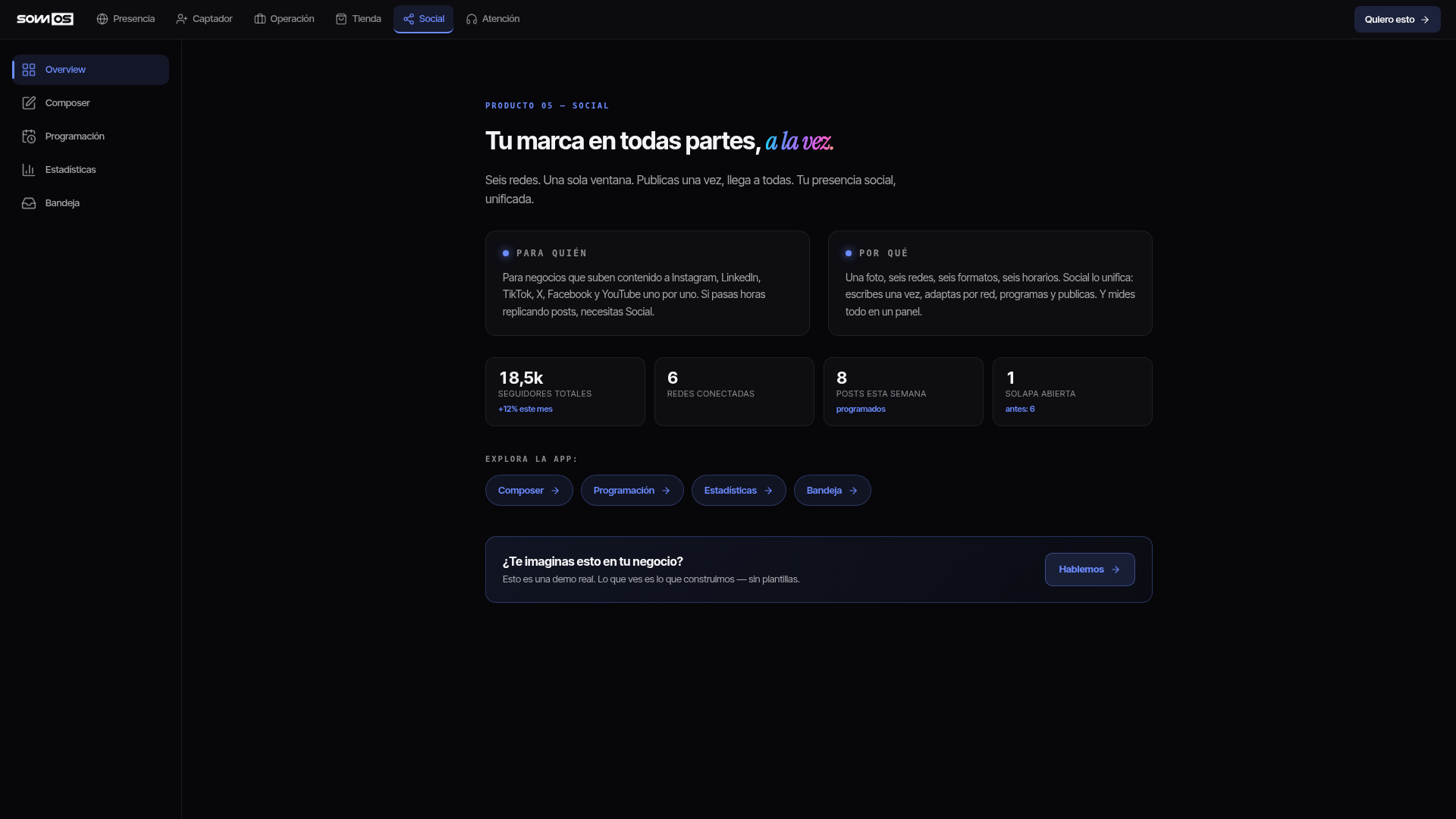
Post once. Be everywhere.
Every social network separately, the same post six times… and in the end you post nothing.
Write once and it appears on all your networks at the right time. And you see which content works without opening six apps.
- One post, all your networks
- Publishes itself, on schedule
- Know which content works
Nobody left waiting for a reply
Instagram messages mixed with email, lost tickets and customers tired of waiting.
All conversations in one inbox, with instant prepared replies. You approve, the system answers.
- One inbox for every channel
- Replies in minutes, not hours
- The urgent never gets buried