Accessibility Statement
What is the web accessibility statement document?
The web accessibility statement document is an important component within the context of web accessibility. This document is a formal statement issued by an organization, company or entity that establishes its commitment to web accessibility, that is, to the creation and maintenance of websites and applications that are accessible to all people, including those with disabilities.
What elements does the accessibility statement usually include?
The web accessibility statement usually includes the following elements:
Elements included in the accessibility statement:
- Commitment to accessibility: The organization expresses its commitment to creating web content accessible to all users, regardless of their abilities or disabilities.
- Standards and guidelines: The standards and guidelines that the organization will follow to ensure the accessibility of its web content are established.
- Procedures and responsibilities: The procedures that the organization will implement to ensure web accessibility at all stages of development and maintenance of the site are detailed.
- Evaluation and monitoring: Methods are established to regularly evaluate the accessibility of web content and monitoring mechanisms are described.
- Feedback and continuous improvement: Feedback channels are provided for users to report accessibility issues.
Who must comply with web accessibility regulations?
Web accessibility regulations apply to various types of organizations:
Private companies
Private companies that must comply with web accessibility regulations are those companies whose websites are of special economic significance, i.e., the company has <strong>more than 100 employees</strong> or its <strong>annual turnover exceeds 6 million</strong> euros.
Affected economic sectors:
- Water supply services to consumers.
- Electronic communications services to consumers.
- Electricity supply services to end consumers.
- Financial services for consumers, including banking, credit or payment services, investment services, private insurance operations, pension plans and insurance brokerage activity.
- Road, rail, sea or air passenger transport services.
- Retail gas supply services.
- Retail trade activities.
- Travel agency services.
Recipients of public funds
In recent times, the European Union, together with the governments of each country, have been allocating public funds in order to help digitize companies. From small to large companies can apply for this type of subsidies to digitize some kind of process of the company.
Public institutions
Royal Decree 1112/2018 establishes that public sector websites and mobile applications must comply with the accessibility requirements established in UNE-EN 301549:2019 and WCAG 2.1 standards at level AA.
Applicable legislation to the web accessibility statement
The legislation applicable to the web accessibility statement and mobile applications is governed by the following regulations:
Applicable legislation:
- Royal Decree 1112/2018, of September 7, on accessibility of websites and mobile applications of the public sector
- Directive (EU) 2016/2102 of the European Parliament and of the Council of October 26, 2016, on the accessibility of the websites and mobile applications of public sector bodies
- UNE-EN 301549 standard on accessibility requirements for ICT products and services
- Web Content Accessibility Guidelines (WCAG)
Your business runs on memory, WhatsApp and five spreadsheets.
SOM-OS turns it into a system: captures clients, serves them, sells and gets paid — even while you sleep. Touch the demos: they are real.
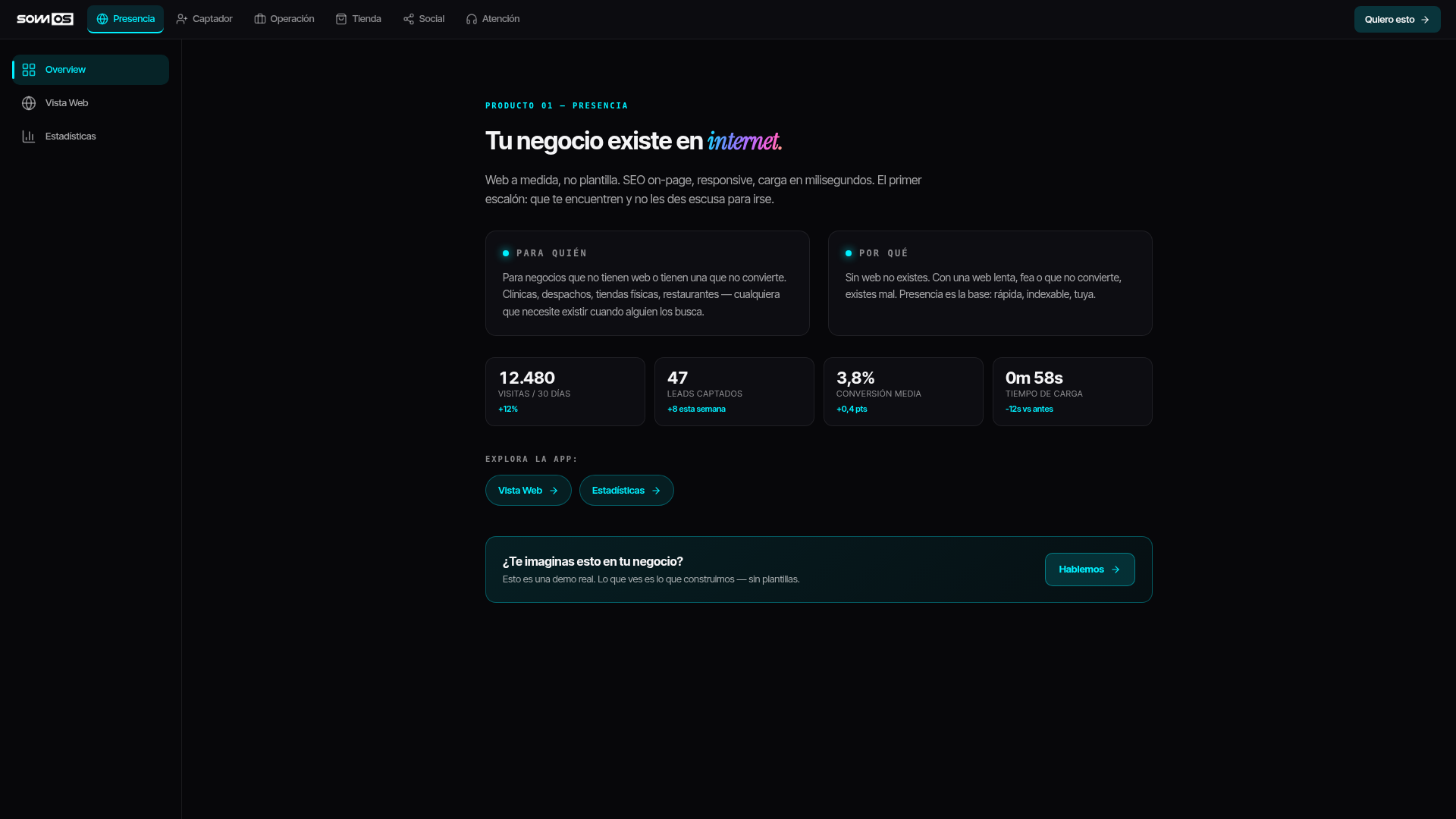
Be found when they look for you
People search Google for you and you don't show up. Or a slow, embarrassing website does.
A website of your own, serious and fast, built to turn visits into customers. The first step to existing on the internet.
- Loads in a second, not ten
- Shows up on Google when they search
- Looks perfect on mobile
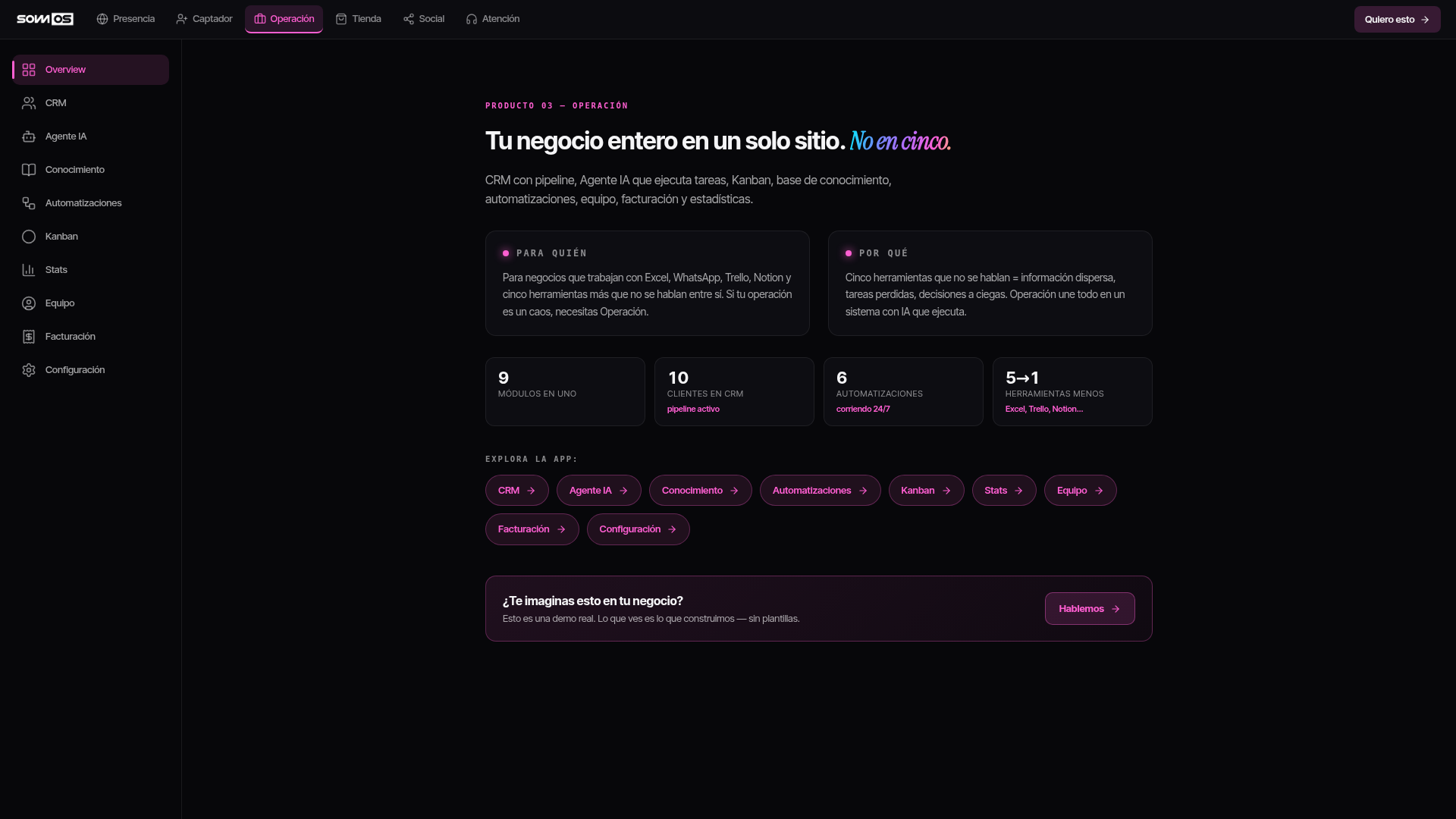
Your whole business in one place
A spreadsheet for clients, another for invoices, WhatsApp for decisions… and none of it talks to each other.
Clients, tasks, invoices and to-dos in the same place — with an assistant that remembers everything for you and tells you what today needs.
- No more “where did I write that down?”
- Repetitive work: the system does it
- Everything important, at a glance
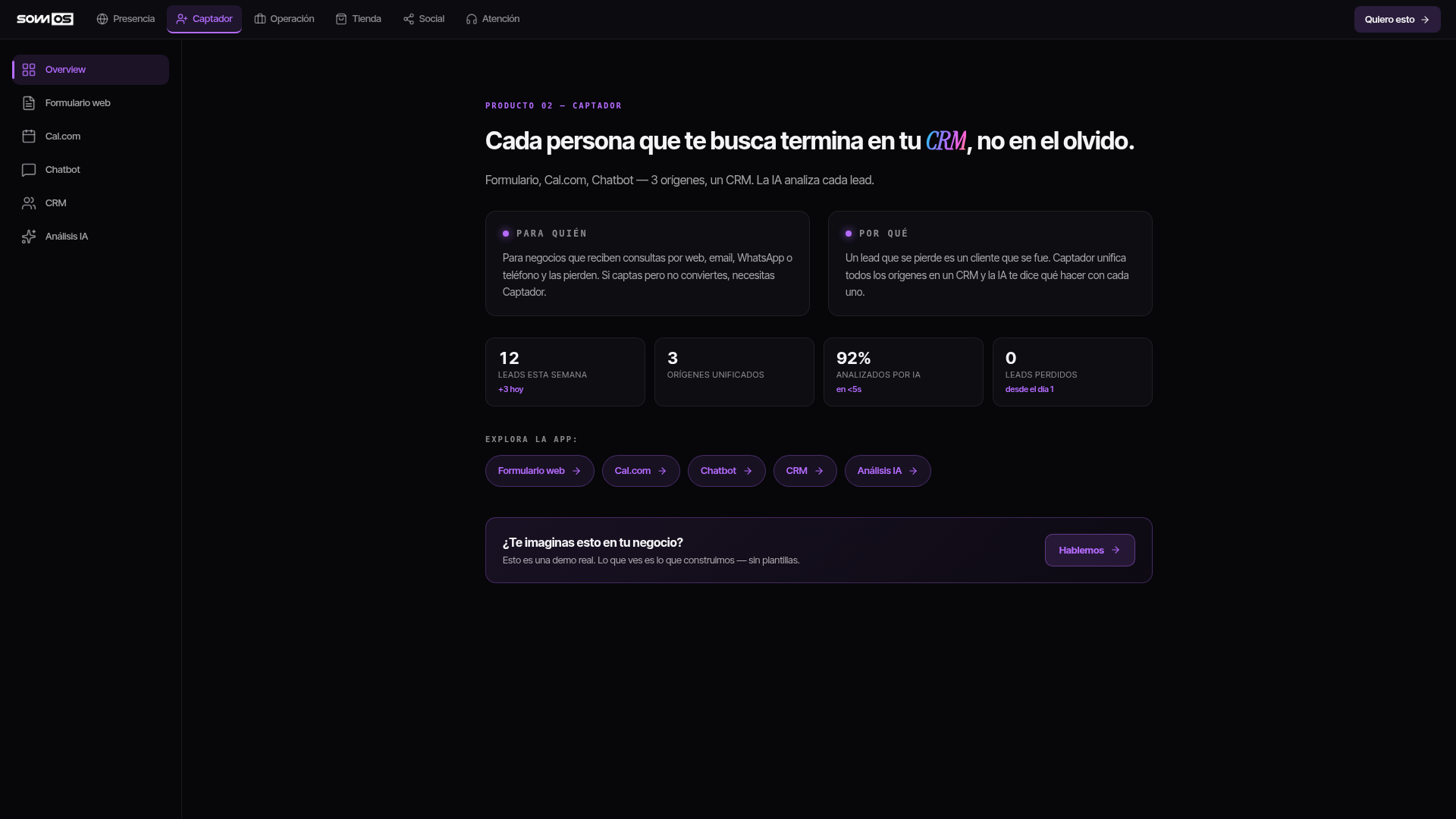
No customer slips away unanswered
Inquiries by WhatsApp, email and phone… and half of them get lost in the noise.
Everything people send you lands in one place, sorted and prioritized. You know who contacted you, what they want and what to do next.
- Every inquiry in one place
- Tells you which lead is urgent
- Nobody is left without an answer
Your store open at night too
You close at six and stop selling until tomorrow. And store platforms eat your margin.
Your catalog, your checkout, your inventory and your orders under your brand. Sell 24/7 with no middleman fees.
- Sell while you sleep
- Inventory always up to date
- No platform commissions
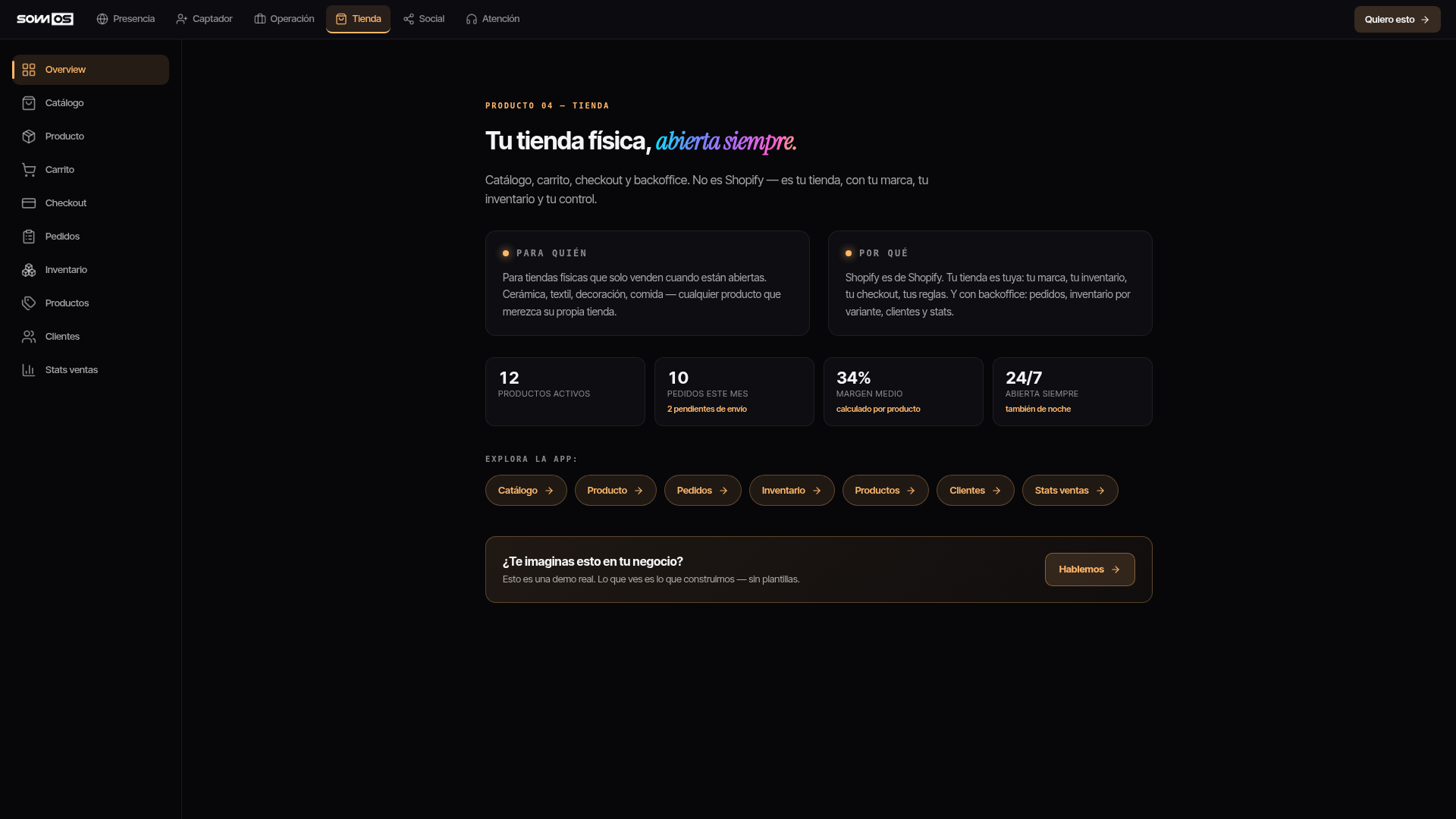
Post once. Be everywhere.
Every social network separately, the same post six times… and in the end you post nothing.
Write once and it appears on all your networks at the right time. And you see which content works without opening six apps.
- One post, all your networks
- Publishes itself, on schedule
- Know which content works
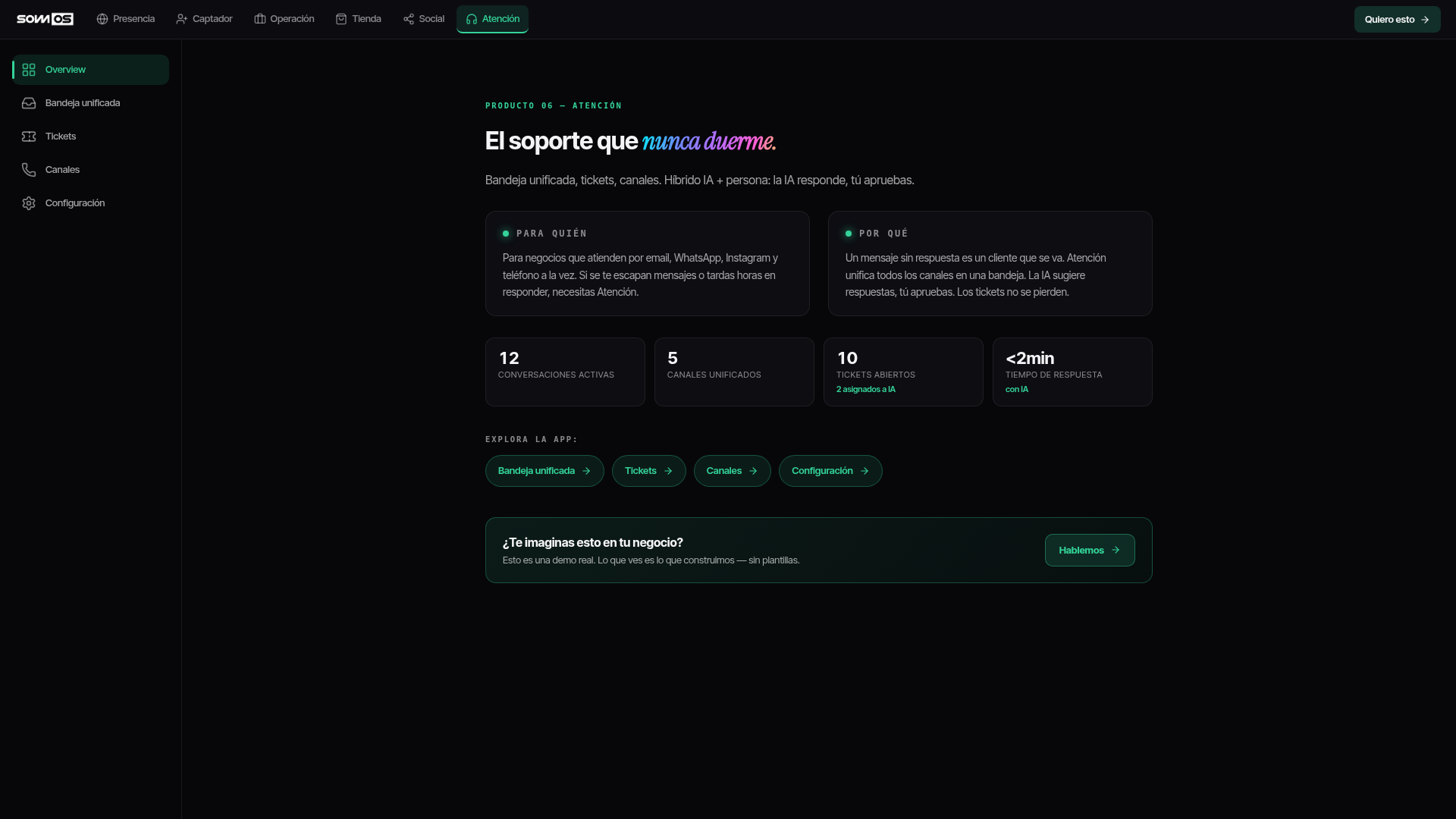
Nobody left waiting for a reply
Instagram messages mixed with email, lost tickets and customers tired of waiting.
All conversations in one inbox, with instant prepared replies. You approve, the system answers.
- One inbox for every channel
- Replies in minutes, not hours
- The urgent never gets buried